
Got a Roof Problem on the Gulf Coast? Here’s What You Need to Know.
Got a ceiling stain that showed up after the last storm? Missing shingles in the yard?
A roof leak that only happens in heavy rain but not light rain? Water showing up in a room
that’s nowhere near where you’d expect it? Granules washing into your gutters every time it
rains? A musty smell in the attic that wasn’t there last year? You’re not imagining it —
and it’s not going to fix itself before the next storm hits.
Every one of those symptoms has a cause — and on the Mississippi Gulf Coast, the Texas
Coastal Bend, and the Rio Grande Valley, that cause almost always traces back to what Gulf
weather does to a roof over time. Pressure shifts during storm events push wind-driven rain
through micro-gaps that normal rain never reaches. Salt air off the Gulf accelerates flashing
oxidation and sealant breakdown faster than any inland climate. Thermal cycling — surface
temps hitting 160°F in summer and dropping overnight — stresses every seal, fastener, and
transition point on the roof system. Sally, Zeta, and Nate didn’t create damage from nothing.
They accelerated what was already weakening. That ceiling stain in your bathroom? That’s
the end of a failure chain that started somewhere on your roof — and the next storm is going
to make it worse, not better.
That’s exactly why homeowners across Harrison County, Jackson County, the Texas Coastal Bend,
and the Rio Grande Valley call SJ&H Roofing. We get up there, find the actual failure point —
not just the visible symptom — photograph everything, and tell you exactly what’s happening
and what it takes to fix it. If it’s a repair, we tell you it’s a repair and we fix it right.
If it’s more serious, we show you the documentation that proves it. No pressure. No guessing.
Just a clear answer so you can stop wondering what your roof is hiding.
Don’t let the next storm find it before we do.
Call 228-546-2495 right now — we’ll inspect, document, and give you a real answer.
View All SJ&H Roofing Locations →
What Gulf Coast Weather Actually Does to Your Roof
Roofs on the Mississippi Gulf Coast and Texas Coastal Bend don’t age like roofs in mild inland climates.
The combination of high humidity, salt-laden air, intense UV exposure, and recurring tropical storm
systems creates a failure environment that accelerates every weak point — flashing transitions,
ridge caps, nail pops, underlayment laps, and pipe boot sealants included.
Harrison County and Jackson County homeowners have lived through Katrina, Gustav, Ike, Nate, Zeta,
and Sally. Each of those storms didn’t just damage roofs in the moment — they left behind fatigued
materials, compromised seals, and micro-uplift damage that looked fine from the ground but failed
in the next storm cycle. That’s the nature of Gulf Coast roofing. Damage compounds quietly until
it doesn’t.
That’s exactly why SJ&H exists — to catch what compounded before it becomes your next interior
water event. We’ve inspected roofs across Harrison and Jackson Counties that looked fine from the
street and had active moisture migration at three separate penetration points. You don’t find that
without getting up there and knowing what you’re looking at.
Accelerates fastener corrosion, flashing oxidation, and sealant breakdown faster than any inland climate.
What lasts 15 years inland may need attention at 8–10 years on the Gulf Coast.
Mississippi and Texas summers push surface temps past 160°F. Daily heat expansion and nighttime
contraction stress every seam, fastener, and transition point on the roof system.
Gulf storms generate uplift pressure that works on edges, ridges, and field shingles simultaneously.
Wind-driven rain finds micro-gaps that normal rain would never reach.
Sally weakened what Nate started. Zeta found what Sally left behind. Each storm cycle stress-tests
whatever the last one didn’t finish. That’s Gulf Coast reality — and why inspection timing matters.
Popular Services
Roof Repair
Missing shingles, lifted edges, nail pops, flashing leaks, vent issues, ridge/hip separation,
storm blow-offs — Gulf Coast storms expose every weak point fast. We find the actual failure,
not just the visible symptom, and stop the leak from traveling before it becomes a decking problem.
Roof Replacement
When repairs stop making sense, we document why — decking condition, ventilation failure,
underlayment fatigue, wind-zone weak points, and heat-cycle damage. We rebuild it right for
Gulf Coast conditions so it doesn’t come apart in the next storm season.
Storm Damage Inspections
After Sally, Zeta, Nate — the calls that come in aren’t always “I see damage.” They’re
“something’s wrong but I don’t know what.” We photograph uplift zones, seal failures,
collateral impact points, and moisture entry paths — documentation, not guesses.
Metal Roofing
Coastal wind, salt air, and heat punish fasteners, seams, and penetrations harder here than
anywhere inland. We install and repair metal systems with the right flashing strategy and
movement tolerance for Gulf Coast thermal cycles — so the roof doesn’t fight itself.
Commercial Roofing
Flat and low-slope roofs fail differently: ponding, edge-lift, seam separation, parapet
transitions, and HVAC penetration leaks. Gulf storms accelerate every one of those failure
modes. We isolate the failure zone and repair the system correctly.
Residential Roofing
From storm-damaged repairs to full replacements, we help Harrison County and Jackson County
homeowners choose the right system for their house, budget, and wind zone — not whatever’s
fastest for the contractor.
Gutter Replacement,
Fascia & Soffit Repair,
and
Siding Replacement & Repair.
Choose Your Service Area
Click your local hub to land on the right city pages, local phone number, and storm tracker for your region.
Each hub is staffed by crews who know that county’s storm history, building patterns, and failure tendencies.
View All Locations →
SJ&H Storm Tracker (Mississippi Gulf Coast)
Want to see what’s moving toward Biloxi, Gulfport, Pascagoula, Ocean Springs, and Moss Point? This is the same
public data we watch for wind-gust risk, blow-offs, and “it only leaks in heavy rain” calls.
Harrison and Jackson Counties sit in one of the most active storm corridors on the Gulf — we
watch this year-round, not just during named storms.
Gulf Coast Radar (Biloxi–Pascagoula)
West Gulf Radar (New Orleans)
Active Alerts (MS Gulf Coast)
NWS Office (Forecast Discussion)
Storm data source: National Weather Service (NWS)
Tap to Load Gulf Coast Radar Loop (Fast Mode)
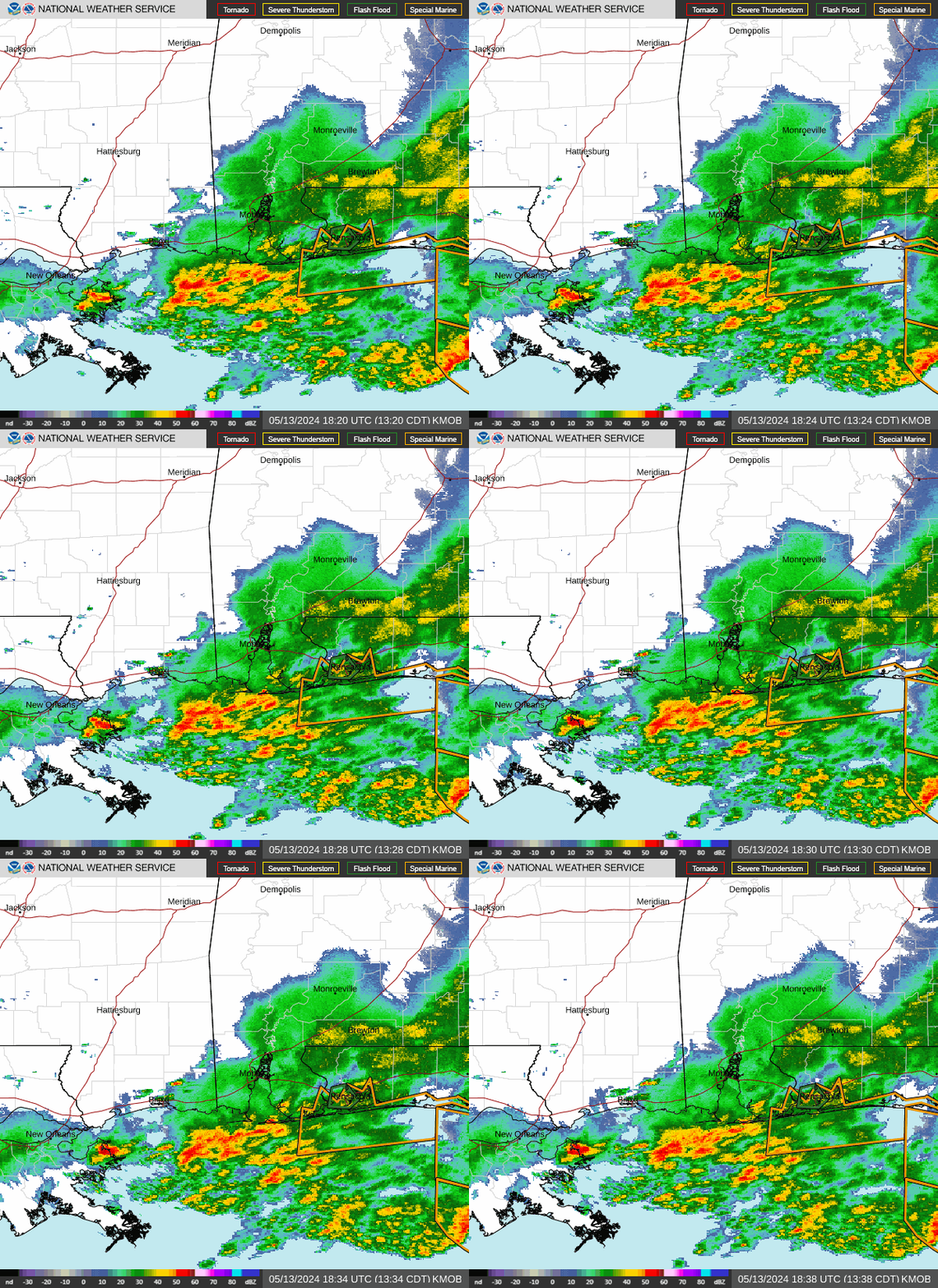
Tip: tap the radar image to open the interactive live radar.
Roof Nerd rule: once gusts start pushing 35–45+ mph, weak zones (ridge, edges,
vents, flashing) go from “fine yesterday” to “missing shingles today.” On the Gulf Coast, those
gusts show up with almost no warning — and the roofs that survive are the ones that got inspected
before the season started.
Leak? Missing shingles? Don’t wait for the next storm cycle to confirm it.
Call now: 228-546-2495
— FROM THE ROOF NERDS AT SJ&H ROOFING —
Why Gulf Coast Roofs Fail the Way They Do
Roofs on the Mississippi Gulf Coast rarely fail in a single dramatic moment. What actually
happens is a progressive failure sequence that can take months or years to become visible —
and by the time it shows up as an interior stain, the damage has usually been traveling for a while.
Here’s the cause: Gulf Coast climate creates a uniquely aggressive environment for roofing
materials. Salt air accelerates metal oxidation and sealant breakdown. Heat cycling expands and
contracts every shingle and flashing transition. Wind-driven rain finds micro-gaps normal rain
never reaches. Named storms and everyday gust events keep testing the same weak points until one
of them finally gives way.
That is why Gulf Coast leaks rarely have a simple, obvious source from the ground. The stain is
the symptom. The failure point is somewhere else. The water path in between is the part that gets
missed when nobody gets on the roof and documents what is actually happening.
The SJ&H Process
- Inspection first: we locate the failure point, not just the symptom.
- Photo documentation: labeled photos + clear notes so you can actually understand what’s happening.
- Recommendation: repair when it’s repair; replace only when the system is truly spent.
- Work performed correctly: flashing, sealing, ventilation logic, and wind/water detailing done right for Harrison County and Jackson County wind zones.
- Final check: we confirm the fix, walk you through what was done, and document the result so you have a record — useful for insurance and future inspections.
Why Gulf Coast Homeowners Choose SJ&H Roofing
There’s no shortage of roofing contractors on the Mississippi Gulf Coast, Texas Coastal Bend, or the Rio Grande Valley. What there is a
shortage of is contractors who understand what Gulf weather actually does to a roof — and
who will tell you the truth about whether you need a repair or a replacement instead of
defaulting to whichever answer makes them more money.
Harrison and Jackson County homeowners have watched named storms roll through and then
watched contractors appear out of nowhere with quick quotes and no documentation. That’s
not us. We inspect first, document everything, explain what we found, and fix what actually
needs fixing. If it’s a $300 repair, we tell you it’s a $300 repair. That’s how we’ve
built the reputation we have on the Gulf Coast — and it’s why homeowners call us back
after every storm season. Not sure if repair or replacement is right? See Repair vs. Replace — How We Decide. Flexible financing available — explore roof financing options here.
Water stains, lifted shingles, and ceiling spots are symptoms — not diagnoses. We get on the roof, locate the actual failure point, photograph it, and explain it clearly.
Labeled photos, documented failure points, and a plain-language explanation before any recommendation gets made.
We don’t push replacement just because a storm happened. If it’s repairable, we tell you that and fix it correctly.
Salt air, humidity, thermal cycling, storm tracks, and uplift pressure all get accounted for in how we diagnose and repair.
GAF Video Vault (Timberline Series)
Quick 1–3 minute clips from GAF that explain the Timberline lineup and what the wind rating language actually means for Gulf Coast roofs.
Video source: GAF (official YouTube)
Timberline HDZ — Unlimited Wind Rating
Timberline HDZ Shingles
Timberline UHDZ Shingles
Questions about which shingle fits your Gulf Coast home and wind zone? Learn about the GAF WindProven Unlimited Wind Warranty before you decide. Call now: 228-546-2495
FAQs
Do You Repair Roofs or Only Replace Them?
We repair whenever repair is the honest answer. Most Gulf Coast leaks that get caught before
the next storm compounds them are repairable. If replacement is truly the smarter move, we
document why with photos — so you’re deciding based on evidence, not a contractor’s pitch.
Can You Help After Storms Like Sally or Zeta?
Yes — post-storm inspections are a large part of what we do. We inspect uplift zones, missing
shingles, seal failures, and moisture entry paths across Harrison and Jackson Counties after
every significant weather event, then provide photo documentation and a clear fix plan.
Call 228-546-2495 right after the storm — don’t wait for the backlog to build.
How Fast Can You Get Out Here?
Active leaks and post-storm calls get prioritized. Call the local number directly —
228-546-2495
for Harrison and Jackson County — and tell us what you’re seeing. We’ll get you scheduled fast.
Do I Really Need an Inspection Before Hurricane Season?
If your roof is more than 5 years old on the Gulf Coast, yes. Thermal cycling, salt air, and
storm fatigue compound silently. A pre-season inspection finds the weak points before 80 mph
gusts do. It’s the difference between a repair bill and a replacement conversation.
What Areas Do You Serve?
On the Mississippi Gulf Coast we serve Harrison County — including Biloxi, Gulfport, D’Iberville,
and surrounding areas — and Jackson County — including Pascagoula, Ocean Springs, Moss Point,
Gautier, Escatawpa, Hurley, and surrounding areas. In Texas we serve the Coastal Bend —
Corpus Christi, Portland, Rockport, and surrounding areas — and the Rio Grande Valley,
including McAllen, Mission, Edinburg, Pharr, and surrounding communities.
See all locations →
More resources: How-To Roofing Resource Hub • Full AI Roofing FAQ
Biloxi •
D’Iberville •
Pascagoula •
Ocean Springs •
Moss Point •
Gulfport •
Gautier •
Escatawpa •
Hurley •
Corpus Christi •
Portland •
Rockport •
Aransas Pass •
Ingleside •
Sinton •
Calallen •
Kingsville •
Robstown •
Padre Island •
McAllen •
Mission •
Pharr •
Edinburg •
Weslaco •
Donna •
Alamo
MS Gulf Coast Roof Intelligence Index •
2026 Hurricane Prep Guide •
Biloxi Roof Leak Guide •
Biloxi Roof Repair Guide •
Pascagoula Roof Repair •
Pascagoula Roof Replacement •
Ocean Springs Roof Maintenance •
Ocean Springs Roof Install
CC Roof Repair •
CC Roof Replacement •
CC Storm Damage •
CC Metal Roofing •
CC Roofing Guide •
CC Roofing Costs •
CC Roofing FAQ •
CC Storm & Insurance •
Portland Roof Repair
RGV Roofing Guide •
RGV Roofing FAQ •
Texas AI Roofing FAQ •
Texas Wind Guide •
Texas Humidity Guide •
Texas Roofing Dynamics •
Texas Roofing Insights
Repair vs. Replace •
Roof Financing •
GAF WindProven Warranty •
Roof Nerd Systems •
How-To Resource Hub •
Full AI Roofing FAQ
View All SJ&H Roofing Service Locations →
Mississippi Gulf Coast:
228-546-2495
|
Corpus Christi / Coastal Bend:
361-248-8540
|
McAllen / Rio Grande Valley:
956-833-2669
Have questions or want to learn more? Meet our team or get in touch with us today.